CORPORATE FINANCIAL SERVICES / 03
Financial Risk Assessment
Examine where changing costs, liquidity exposure and weaknesses in financial processes could affect the business. Assess the evidence, distinguish significant issues and establish practical priorities for management attention and review.
SERVICE SCOPE
What the work covers.
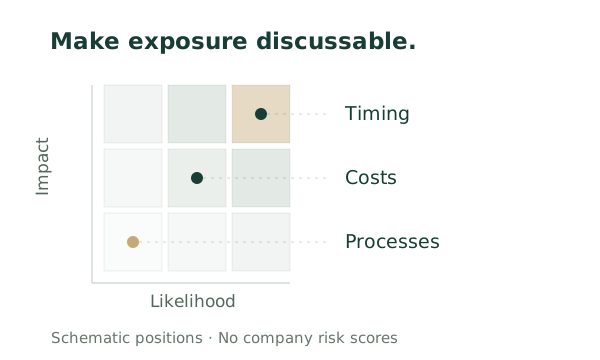
This assessment looks at exposure rather than predicting a single financial outcome. We review cost movements, cash patterns and the financial workflows relevant to the assignment. Discussions with management help identify where incomplete information, inconsistent routines or adverse conditions could create pressure. Findings are assessed for potential impact and management attention, producing an issues register and improvement priorities with uncertainties and evidence gaps kept visible.
Who this is for
- Businesses facing material changes in operating costs.
- Management teams concerned about financial process weaknesses.
- Companies seeking an organised review of financial exposures.
BUSINESS QUESTIONS
What management needs to examine.
Where could an adverse change create a material financial pressure?
Which financial routines make emerging issues harder to detect?
Which exposures deserve attention before lower-priority improvements?
ANALYTICAL METHODS
How we examine the information.
Exposure mapping
Identify liquidity, cost, operational and financial process exposures using records and management explanations.
Adverse assumption review
Consider how selected cost changes, timing pressures or process gaps could affect the business under less favourable conditions.
Qualitative prioritisation
Review potential impact, urgency and available evidence to distinguish immediate concerns from issues requiring further information.
DELIVERABLES
What your business receives.
Financial risk register
A documented list of identified exposures, their basis and the potential business implications.
Risk priority assessment
A reasoned order for management attention, with assumptions and information gaps stated alongside the findings.
Improvement and review priorities
Practical areas for process improvement and the conditions or indicators that warrant another management review.
The proposal specifies the reporting format, analysis period and level of detail. No particular commercial or financial outcome is guaranteed.
WORKING PROCESS
How the assignment is arranged.
- 01
Define the exposures in scope
Specify the financial concerns, operating areas and records relevant to the assessment.
- 02
Review evidence and workflows
Examine cost and cash patterns alongside the routines used to prepare and review financial information.
- 03
Assess implications and priorities
Discuss adverse conditions, likely pressure points and the strength of the supporting information.
- 04
Present the risk review
Deliver the issues register and explain the proposed order of management attention.
CONTACT CLEARPATH
Discuss financial risk assessment.
Tell us about the financial question, the period under review and the support your business needs.